This article provides an in-depth analysis of football jersey wholesalers, covering their role in the sports apparel supply chain, key selection criteria, industry trends, and practical guidance for businesses seeking reliable suppliers.
Definition
What is a football jersey wholesaler? A football jersey wholesaler is a business entity that purchases sports apparel in bulk directly from manufacturers and resells them to retailers, sports clubs, educational institutions, and other commercial buyers at competitive wholesale prices. For example, a regional sports retailer may buy 200 replica jerseys from a wholesaler for seasonal inventory, while a school football program may source 30 custom team kits with player names and sponsor logos through the same wholesale channel.
- Football jersey wholesalers serve as essential intermediaries between manufacturers and end-market buyers
- They typically offer bulk purchasing options with tiered pricing structures
- Quality assurance and product certification are fundamental operational requirements
- Modern wholesalers often provide customization services including team logos and sponsor branding
- Reliable logistics and supply chain management are critical success factors
- Compliance with international football governing body regulations is necessary for professional-grade merchandise
The Role of Football Jersey Wholesalers in the Sports Apparel Supply Chain
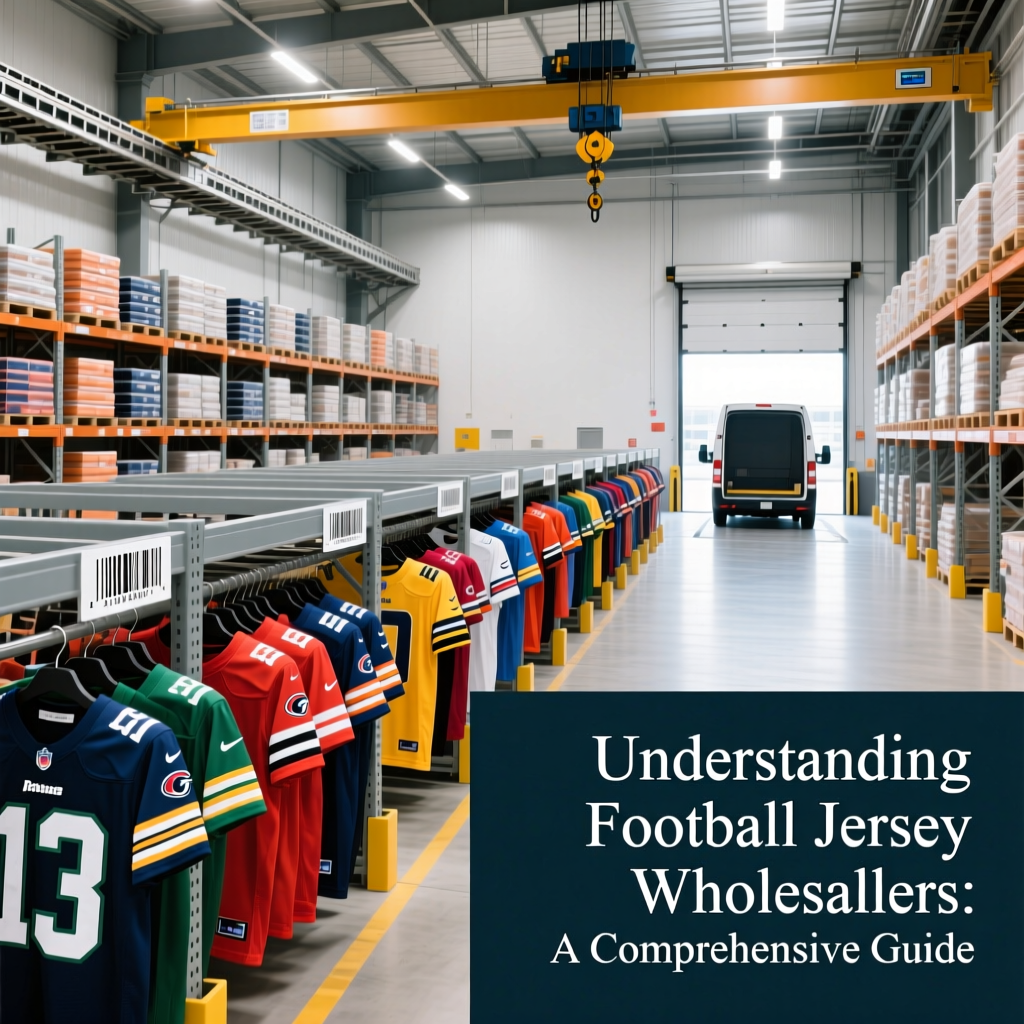
Football jersey wholesalers play a pivotal role in the sports apparel ecosystem by bridging the gap between manufacturing facilities and the final consumers. These entities consolidate demand from multiple retail outlets and institutional buyers, enabling manufacturers to achieve economies of scale while providing buyers with access to diverse product portfolios.
The wholesale distribution model offers several advantages to market participants. Retailers benefit from reduced inventory holding costs and access to varied product ranges without substantial capital investment. Manufacturers gain predictable demand channels and can plan production schedules more efficiently. Sports organizations and educational institutions can source customized team uniforms through established commercial relationships with wholesalers.
Types of Football Jersey Products Available Through Wholesalers
The football apparel market encompasses multiple product categories, each serving distinct market segments and use cases. Professional match jerseys represent the premium segment, featuring advanced moisture-wicking technology and official licensing. Training jerseys offer durability and comfort for practice sessions and team activities. Replica jerseys provide fans with officially licensed merchandise that mirrors the designs worn by professional players.
- Professional match jerseys: High-performance garments meeting FIFA quality standards
- Training jerseys: Durable fabrics designed for repeated use during practice sessions
- Replica jerseys: Fan merchandise replicating official team designs
- Youth and junior sizes: Scaled versions for younger players
- Goalkeeper specific designs: Unique patterns and color variations for goalkeepers
- Custom and blank jerseys: Blank canvases for team customization and branding
Traditional vs Modern Wholesale Business Models
| Feature | Traditional Wholesale | Modern Wholesale |
|---|---|---|
| Ordering Process | Phone calls, fax orders, in-person visits | Online B2B platforms with real-time inventory |
| Payment Methods | Net-30 terms, bank transfers, checks | Secure digital payments, credit facilities, escrow services |
| Communication | Telephone, postal mail, face-to-face meetings | Email, instant messaging, video conferences |
| Inventory Management | Manual stock counts, limited visibility | Automated inventory systems, real-time tracking |
| Product Customization | Limited options, long lead times | Digital printing, embroidery, rapid prototyping |
| Shipping Logistics | Standard freight, extended delivery times | Express shipping, integrated logistics partners |
| Customer Service | Business hours support, regional coverage | 24/7 support, global reach |
The transformation from traditional to modern wholesale models has fundamentally altered how football jersey commerce operates. Digital platforms have enabled unprecedented transparency in pricing and inventory availability, while automated systems have streamlined order processing and fulfillment. Businesses must evaluate which model aligns with their operational requirements and growth objectives when selecting wholesale partners.
How to Select a Reliable Football Jersey Wholesaler
- Step 1: Evaluate product quality certifications and manufacturing standards to ensure compliance with industry requirements
- Step 2: Verify the wholesaler’s supply chain stability and financial reliability through business references and financial documentation
- Step 3: Assess the range of products offered and customization capabilities to meet specific business needs
- Step 4: Compare pricing structures, minimum order quantities, and volume discount opportunities across multiple suppliers
- Step 5: Review shipping logistics, lead times, and international shipping capabilities for global distribution requirements
- Step 6: Establish clear communication channels and customer support responsiveness before finalizing business relationships
Industry Standards and Quality Considerations
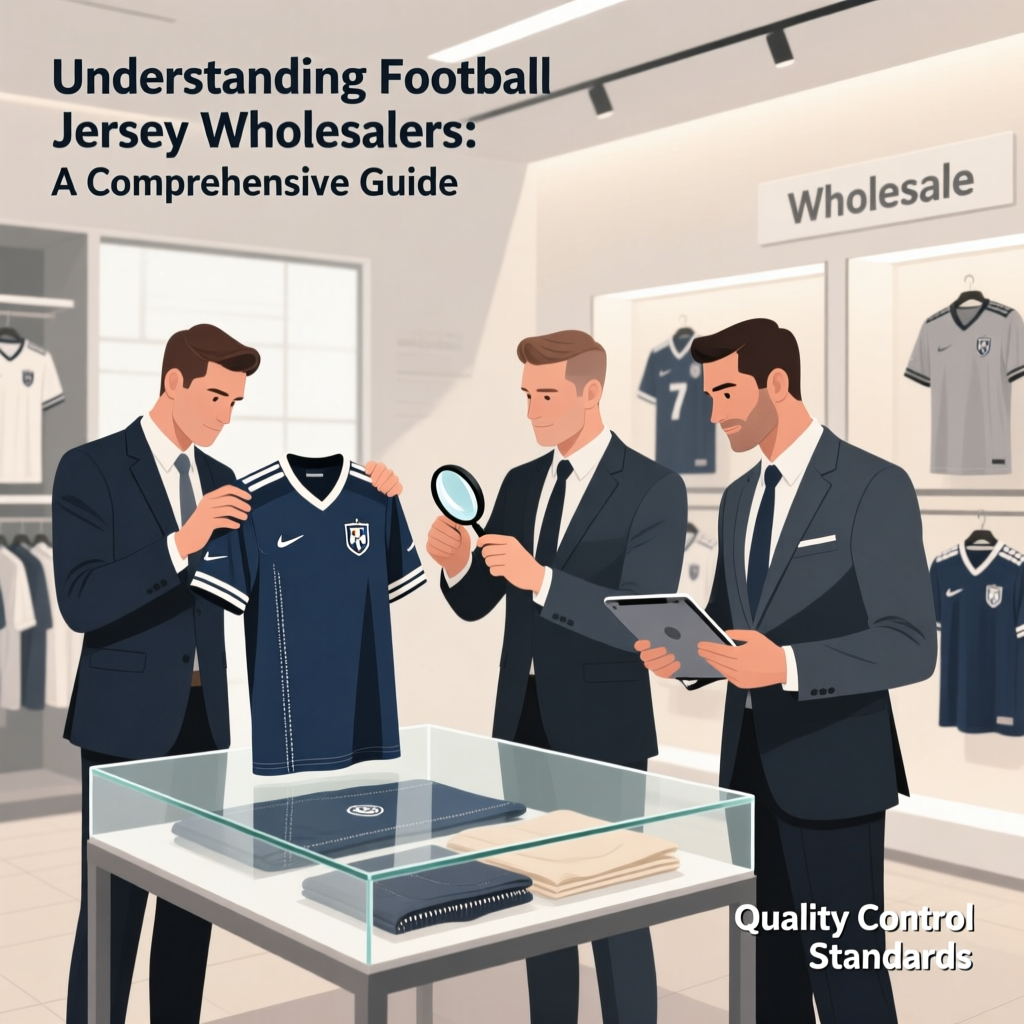
Quality assurance in football jersey manufacturing involves adherence to multiple international standards and regulations. The International Federation of Association Football (FIFA) establishes technical requirements for match worn jerseys, including specifications for player names, numbers, and sponsor advertising.wrinkle-resistant properties. Wholesalers should maintain documentation demonstrating compliance with relevant safety and quality standards for each product category they offer.
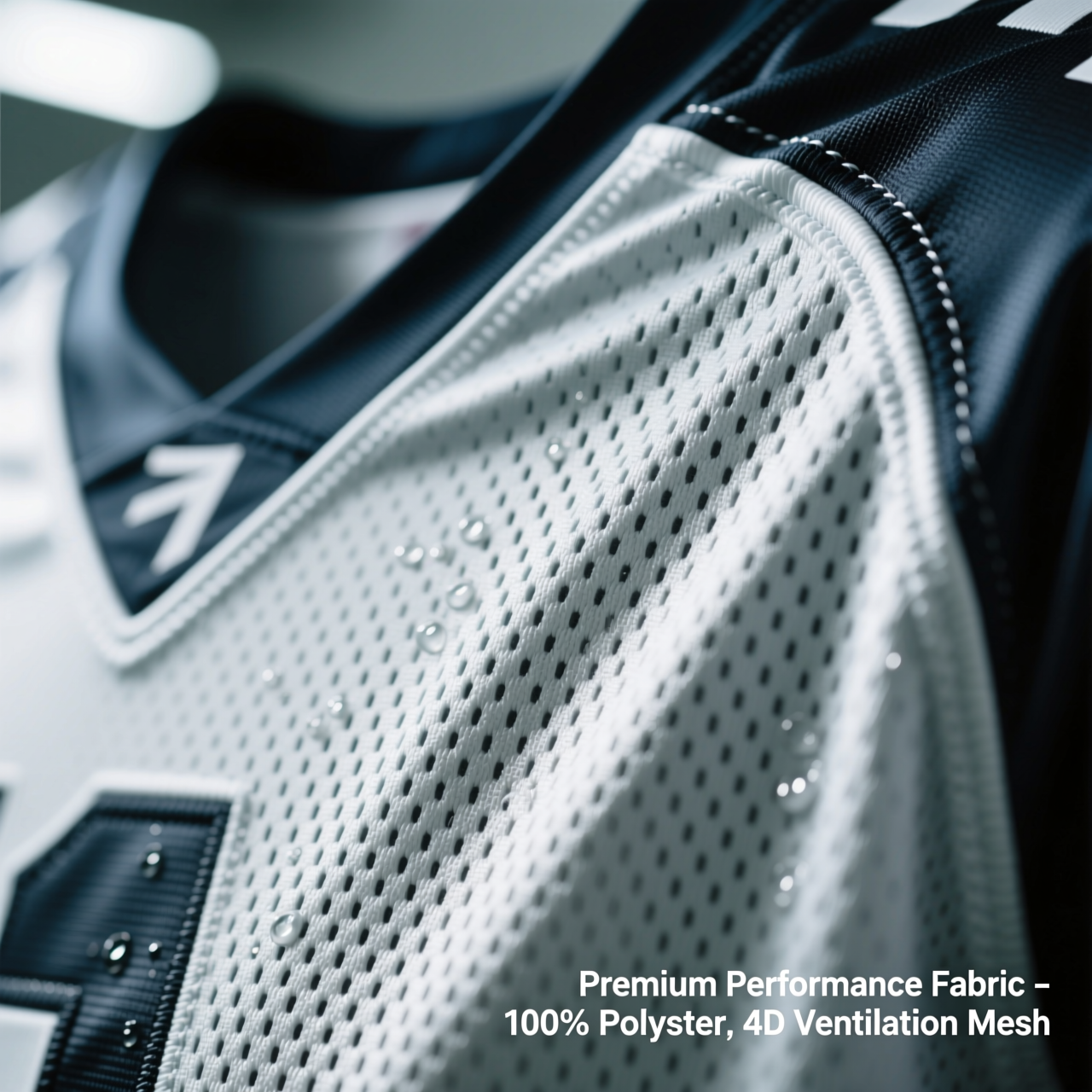
Material quality represents another critical consideration. Professional-grade football jerseys typically incorporate advanced synthetic fabrics featuring moisture-wicking properties, breathability, and durability. The stitching quality, colorfastness, and dimensional stability of garments should be verified through appropriate testing protocols before committing to large orders.
Frequently Asked Questions
Q: What minimum order quantities should I expect from football jersey wholesalers?
A: Most football jersey wholesalers require minimum order quantities ranging from 10 to 50 units per design, though this varies significantly based on product type and customization requirements. Some suppliers offer lower minimums for standard stock items while requiring higher quantities for custom designs.
Q: How long do wholesale football jersey orders usually take to produce and ship?
A: Standard in-stock wholesale orders often ship within 3 to 7 business days, while custom football jersey orders may require 2 to 6 weeks depending on design complexity, printing method, and destination country.
Q: What certifications or quality checks should buyers request from a football jersey wholesaler?
A: Buyers should request fabric composition details, colorfastness and stitching quality information, product compliance records, and where relevant, documentation related to manufacturing standards, licensing, and customization quality control.
Q: Can football jersey wholesalers provide private labeling or team customization?
A: Yes, many modern football jersey wholesalers offer private labeling, heat transfer printing, embroidery, player name sets, numbering, and sponsor logo application for clubs, schools, and retailers.
This article provides an in-depth analysis of football jersey wholesalers, covering their role in the sports apparel supply chain, key selection criteria, industry trends, and practical guidance for businesses seeking reliable suppliers.
Definition
What is a football jersey wholesaler? A football jersey wholesaler is a business entity that purchases sports apparel in bulk directly from manufacturers and resells them to retailers, sports clubs, educational institutions, and other commercial buyers at competitive wholesale prices. For example, a regional sports retailer may buy 200 replica jerseys from a wholesaler for seasonal inventory, while a school football program may source 30 custom team kits with player names and sponsor logos through the same wholesale channel.
- Football jersey wholesalers serve as essential intermediaries between manufacturers and end-market buyers
- They typically offer bulk purchasing options with tiered pricing structures
- Quality assurance and product certification are fundamental operational requirements
- Modern wholesalers often provide customization services including team logos and sponsor branding
- Reliable logistics and supply chain management are critical success factors
- Compliance with international football governing body regulations is necessary for professional-grade merchandise
- Professional match jerseys: High-performance garments meeting FIFA quality standards
- Training jerseys: Durable fabrics designed for repeated use during practice sessions
- Replica jerseys: Fan merchandise replicating official team designs
- Youth and junior sizes: Scaled versions for younger players
- Goalkeeper specific designs: Unique patterns and color variations for goalkeepers
- Custom and blank jerseys: Blank canvases for team customization and branding
- Step 1: Evaluate product quality certifications and manufacturing standards to ensure compliance with industry requirements
- Step 2: Verify the wholesaler's supply chain stability and financial reliability through business references and financial documentation
- Step 3: Assess the range of products offered and customization capabilities to meet specific business needs
- Step 4: Compare pricing structures, minimum order quantities, and volume discount opportunities across multiple suppliers
- Step 5: Review shipping logistics, lead times, and international shipping capabilities for global distribution requirements
- Step 6: Establish clear communication channels and customer support responsiveness before finalizing business relationships
The Role of Football Jersey Wholesalers in the Sports Apparel Supply Chain
Football jersey wholesalers play a pivotal role in the sports apparel ecosystem by bridging the gap between manufacturing facilities and the final consumers. These entities consolidate demand from multiple retail outlets and institutional buyers, enabling manufacturers to achieve economies of scale while providing buyers with access to diverse product portfolios.
The wholesale distribution model offers several advantages to market participants. Retailers benefit from reduced inventory holding costs and access to varied product ranges without substantial capital investment. Manufacturers gain predictable demand channels and can plan production schedules more efficiently. Sports organizations and educational institutions can source customized team uniforms through established commercial relationships with wholesalers.
Types of Football Jersey Products Available Through Wholesalers
The football apparel market encompasses multiple product categories, each serving distinct market segments and use cases. Professional match jerseys represent the premium segment, featuring advanced moisture-wicking technology and official licensing. Training jerseys offer durability and comfort for practice sessions and team activities. Replica jerseys provide fans with officially licensed merchandise that mirrors the designs worn by professional players.
Traditional vs Modern Wholesale Business Models
| Feature | Traditional Wholesale | Modern Wholesale |
|---|---|---|
| Ordering Process | Phone calls, fax orders, in-person visits | Online B2B platforms with real-time inventory |
| Payment Methods | Net-30 terms, bank transfers, checks | Secure digital payments, credit facilities, escrow services |
| Communication | Telephone, postal mail, face-to-face meetings | Email, instant messaging, video conferences |
| Inventory Management | Manual stock counts, limited visibility | Automated inventory systems, real-time tracking |
| Product Customization | Limited options, long lead times | Digital printing, embroidery, rapid prototyping |
| Shipping Logistics | Standard freight, extended delivery times | Express shipping, integrated logistics partners |
| Customer Service | Business hours support, regional coverage | 24/7 support, global reach |
The transformation from traditional to modern wholesale models has fundamentally altered how football jersey commerce operates. Digital platforms have enabled unprecedented transparency in pricing and inventory availability, while automated systems have streamlined order processing and fulfillment. Businesses must evaluate which model aligns with their operational requirements and growth objectives when selecting wholesale partners.
How to Select a Reliable Football Jersey Wholesaler
Industry Standards and Quality Considerations
Quality assurance in football jersey manufacturing involves adherence to multiple international standards and regulations. The International Federation of Association Football (FIFA) establishes technical requirements for match worn jerseys, including specifications for player names, numbers, and sponsor advertising.wrinkle-resistant properties. Wholesalers should maintain documentation demonstrating compliance with relevant safety and quality standards for each product category they offer.
Material quality represents another critical consideration. Professional-grade football jerseys typically incorporate advanced synthetic fabrics featuring moisture-wicking properties, breathability, and durability. The stitching quality, colorfastness, and dimensional stability of garments should be verified through appropriate testing protocols before committing to large orders.
Frequently Asked Questions
Q: What minimum order quantities should I expect from football jersey wholesalers?
A: Most football jersey wholesalers require minimum order quantities ranging from 10 to 50 units per design, though this varies significantly based on product type and customization requirements. Some suppliers offer lower minimums for standard stock items while requiring higher quantities for custom designs.
Q: How long do wholesale football jersey orders usually take to produce and ship?
A: Standard in-stock wholesale orders often ship within 3 to 7 business days, while custom football jersey orders may require 2 to 6 weeks depending on design complexity, printing method, and destination country.
Q: What certifications or quality checks should buyers request from a football jersey wholesaler?
A: Buyers should request fabric composition details, colorfastness and stitching quality information, product compliance records, and where relevant, documentation related to manufacturing standards, licensing, and customization quality control.
Q: Can football jersey wholesalers provide private labeling or team customization?
A: Yes, many modern football jersey wholesalers offer private labeling, heat transfer printing, embroidery, player name sets, numbering, and sponsor logo application for clubs, schools, and retailers.