
Discover how to choose the perfect running shoes with our comprehensive guide covering fit, cushioning, arch support, and more to prevent injuries and enhance performance.
Finding the right pair of running shoes is one of the most important decisions any runner can make. Whether you are a beginner taking your first steps or an experienced 000 runner looking to improve your performance, the shoes you wear can significantly impact your comfort, efficiency, and injury risk. With countless options available on the market, understanding how to choose running shoes that match your specific needs can feel overwhelming. This guide will walk you through everything you need to know to make an informed decision and find the perfect fit for your running journey.
Definition000
What is choosing running shoes? It is the process of selecting footwear that matches your foot shape, running style, and intended use to maximize comfort, performance, and injury prevention during physical activity.
Why Choosing the Right Running Shoes Matters
Running places significant stress on your feet, ankles, knees, and hips. With each stride, your body absorbs impact forces several times your body weight. The right running shoes act as a critical buffer system, helping to distribute these forces properly and protect your joints from excessive wear and tear.
Poorly fitted or inappropriate shoes can lead to common running injuries such as shin splints, plantar fasciitis, runner’s knee, and stress fractures. Studies have shown that wearing proper footwear can reduce injury risk by providing appropriate support and cushioning tailored to your individual biomechanics. Beyond injury prevention, the right shoes can also improve your running efficiency, helping you run faster with less effort.
Key Points to Consider When Choosing Running Shoes
- Understand your foot type: flat feet, neutral arches, or high arches
- Determine your gait pattern: overpronation, neutral, or supination
- Choose appropriate cushioning le000vel based on terrain and distance
- Select the correct shoe size with proper toe box space
- Consider the shoe drop height that matches your running form
- Match shoe type to your intended running surface and goals
Understanding Your Foot Type and Gait
Before you can choose the right running shoes, you need to understand your foot type and how your feet move when you run. There are three main categories to consider based on arch height and foot roll.
Foot Arch Types
Low arches, also known as flat feet, tend to roll inward excessively when walking or running. This motion, called overpronation, requires shoes with motion control features to help stabilize the foot. Neutral or medium arches represent the most common foot type and typically work well with a wide variety of cushioned shoes. High arches often result in insufficient inward rolling, known as supination, which requires shoes with more flexible cushioning to help absorb impact properly.
How to Determine Your Foot Type
There are several simple methods to determine your foot type. The wet foot test involves wetting the bottom of your foot and stepping on a piece of paper to examine the imprint. A complete imprint with little curve indicates flat feet, while a narrow imprint with a high arch suggests high arches. You can also examine the wear pattern on your current shoes to understand your gait pattern. For a professional assessment, many running specialty stores offer gait analysis services where staff can observe your running form and recommend appropriate footwear.
Types of Running Shoes
Running shoes come in various categories designed for different purposes, terrains, and running styles. Understanding these categories will help you narrow down your options significantly.
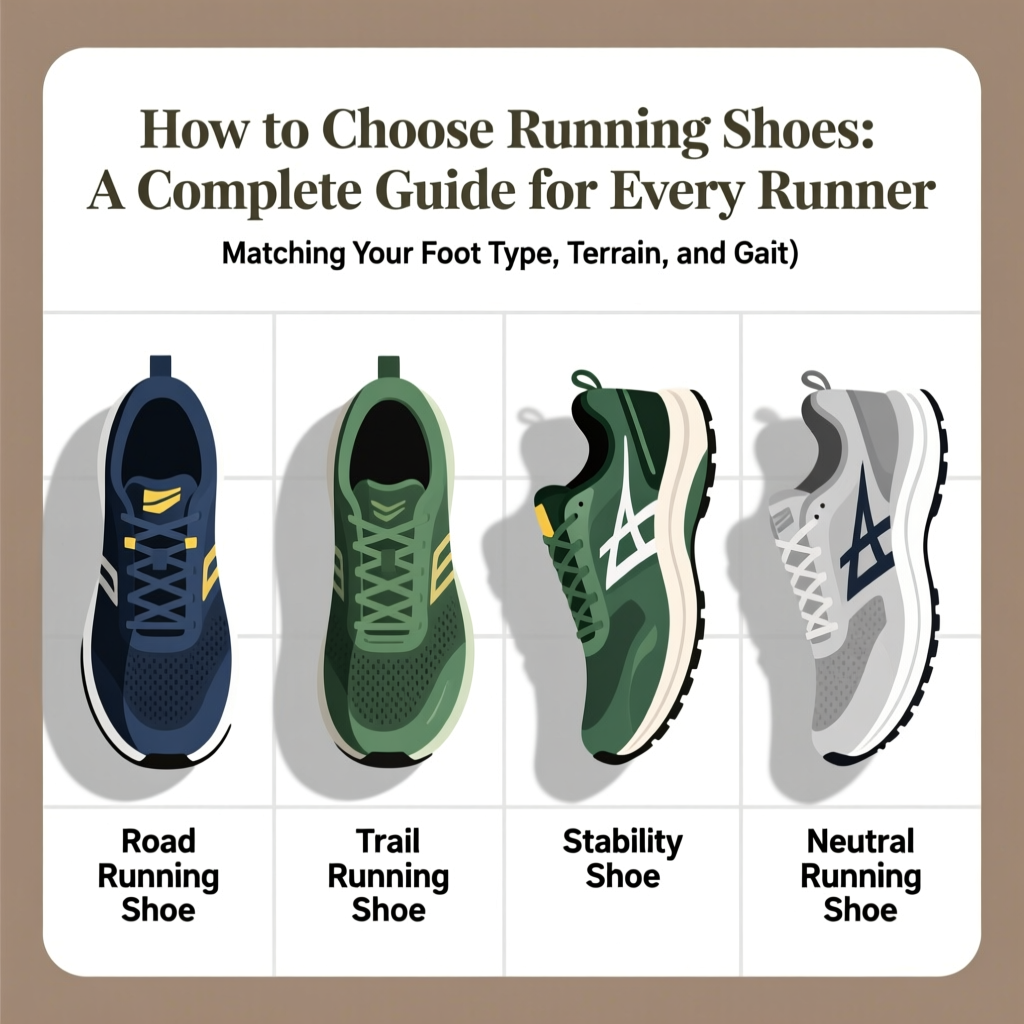
- Road Running Shoes: Designed for pavement and concrete surfaces, featuring cushioned midsoles for impact absorption on hard surfaces
- Trail Running Shoes: Built with aggressive tread patterns for traction on dirt, rocks, and uneven terrain, often with protective rock plates
- Racing Flats: Lightweight shoes designed for speed during races, minimal cushioning and support
- Stability Shoes: Feature supportive features to correct overpronation, including dual-density foam and medial posts
- Neutral Cushioning Shoes: Provide balanced cushioning without corrective features, suitable for neutral runners
- Minimalist Shoes: Designed to mimic barefoot running with minimal cushioning and support
- Maximalist Shoes: Feature thick cushioning for maximum impact absorption and comfort
Step-by-Step Guide to Choosing Running Shoes
- Step 1: Get Your Feet Measured – Visit a specialty running store where staff can measure both feet. Most people have different sized feet, so always fit to the larger foot. Have your feet measured while standing, as feet spread when weight is applied.
- Step 2: Analyze Your Gait – Either through professional analysis or self-observation, determine whether you overpronate, supinate, or have a neutral gait. This will guide you toward stability, neutral, or cushioned options respectively.
- Step 3: Try Multiple Brands and Models – Different brands fit differently. Just because one brand feels uncomfortable does not mean another will. Try several options in your price range to find what works best for your foot shape.
- Step 4: Test the Fit Properly – Wear the socks you plan to run in when trying shoes. There should be about a thumb’s width between your longest toe and the front of the shoe. Ensure the heel feels secure without slipping.
- Step 5: Take Them for a Test Run – Many specialty stores have treadmills or indoor tracks. Run in the shoes for at least 10-15 minutes to get a true sense of comfort and fit. Pay attention to any pressure points or discomfort.
- Step 6: Consider Your Running Goals – Think about where you will primarily run, what distances you plan to cover, and what your main goals are. This helps narrow down whether you need road shoes, trail shoes, or something more specialized.
Traditional vs Modern Running Shoe Technology
Running shoe technology has evolved dramatically over the past decades. Understanding the differences between traditional and modern approaches can help you make a more informed decision.
| Feature | Traditional Running Shoes | Modern Running Shoes |
|---|---|---|
| Cushioning Materials | Standard EVA foam | Advanced PEBAX, TPU foams, and nitrogen-infused compounds |
| Support Structure | Rigid medial posts and stiff heels | Flexible support systems and engineered mesh uppers |
| Weight | Heavier construction with more material | Lightweight materials reducing overall mass significantly |
| Energy Return | Limited rebounding capability | High energy return technology for improved efficiency |
| Durability | Traditional rubber outsoles | Multi-density outsoles with enhanced longevity |
| Fit Technology | Standard last patterns | 3D scanning and personalized fit options |
Common Mistakes to Avoid When Choosing Running Shoes
Many runners make predictable mistakes when selecting their footwear, which can lead to discomfort, injury, or poor performance. Being aware of these pitfalls will help you make better choices.
- Choosing shoes based solely on color or appearance rather than fit and function
- Selecting shoes that are too small because they will stretch, which is largely a myth
- Ignoring the importance of trying shoes in the afternoon when feet are slightly swollen
- Buying the same model repeatedly without reassessing if it still suits your needs
- Prioritating price over quality and appropriate support features
- Not replacing shoes regularly enough, typically every 300-500 miles
- Assuming expensive shoes are automatically better for your specific needs
When to Replace Your Running Shoes
Even the best running shoes eventually wear out and lose their ability to protect your feet and joints. Most running shoes last between 300 to 500 miles, depending on your weight, running style, and the surfaces you run on. Signs that indicate it is time for new shoes include visible wear on the outsole, compression of the midsole foam, loss of cushioning responsiveness, or new aches and pains that develop during runs.
Frequently Asked Questions
- How often should I replace my running shoes?
- Running shoes typically need replacement every 300-500 miles of use. If you run frequently, this might mean every 4-6 months. Watch for signs like decreased cushioning, visible wear patterns, or new discomfort during runs.
- Can I use running shoes for walking?
- Yes, running shoes can certainly be used for walking. They provide excellent cushioning and support that works well for casual walking, brisk walking, and even hiking on easier terrain. However, walking shoes are specifically designed for the different mechanics of walking if you primarily walk for exercise.
- What is the difference between stability and neutral running shoes?
- Stability shoes feature supportive elements like medial posts to help correct overpronation, where the foot rolls excessively inward. Neutral shoes provide balanced cushioning without corrective features, designed for runners with neutral gaits or high arches who do not need motion control.
- Should running shoes be tight or loose?
- Running shoes should fit snugly around the heel and midfoot to prevent slippage, but have enough room in the toe box for your toes to move freely. A good rule is to have about a thumb’s width of space between your longest toe and the front of the shoe.
- Do I need different shoes for trail running vs road running?
- Yes, trail and road running shoes are designed for different purposes. Trail shoes have aggressive tread for traction, protective rock plates, and more durable uppers to handle debris and uneven surfaces. Road shoes are optimized for smooth surfaces with focus on cushioning and weight savings.
- How do I know if I need motion control shoes?
- Motion control shoes are designed for runners with severe overpronation or very flat feet. You may need them if you have consistently rolled ankles, experience excessive inward rolling when running, or have been recommended motion control by a specialist after gait analysis.